Nashville Unscripted · Nashville Museums
I went to the Country Music Hall of Fame as a checkbox. It’s Nashville. You go. I am not a country music person. Two hours later I had to drag myself out. If you’re on the fence because you’re not a country fan, that’s exactly why you should go.
This is a firsthand guide to the Country Music Hall of Fame in Nashville — what’s inside, what surprised me, what the tickets cost, whether the RCA Studio B Tour upgrade is worth it, and where to park without getting taken.
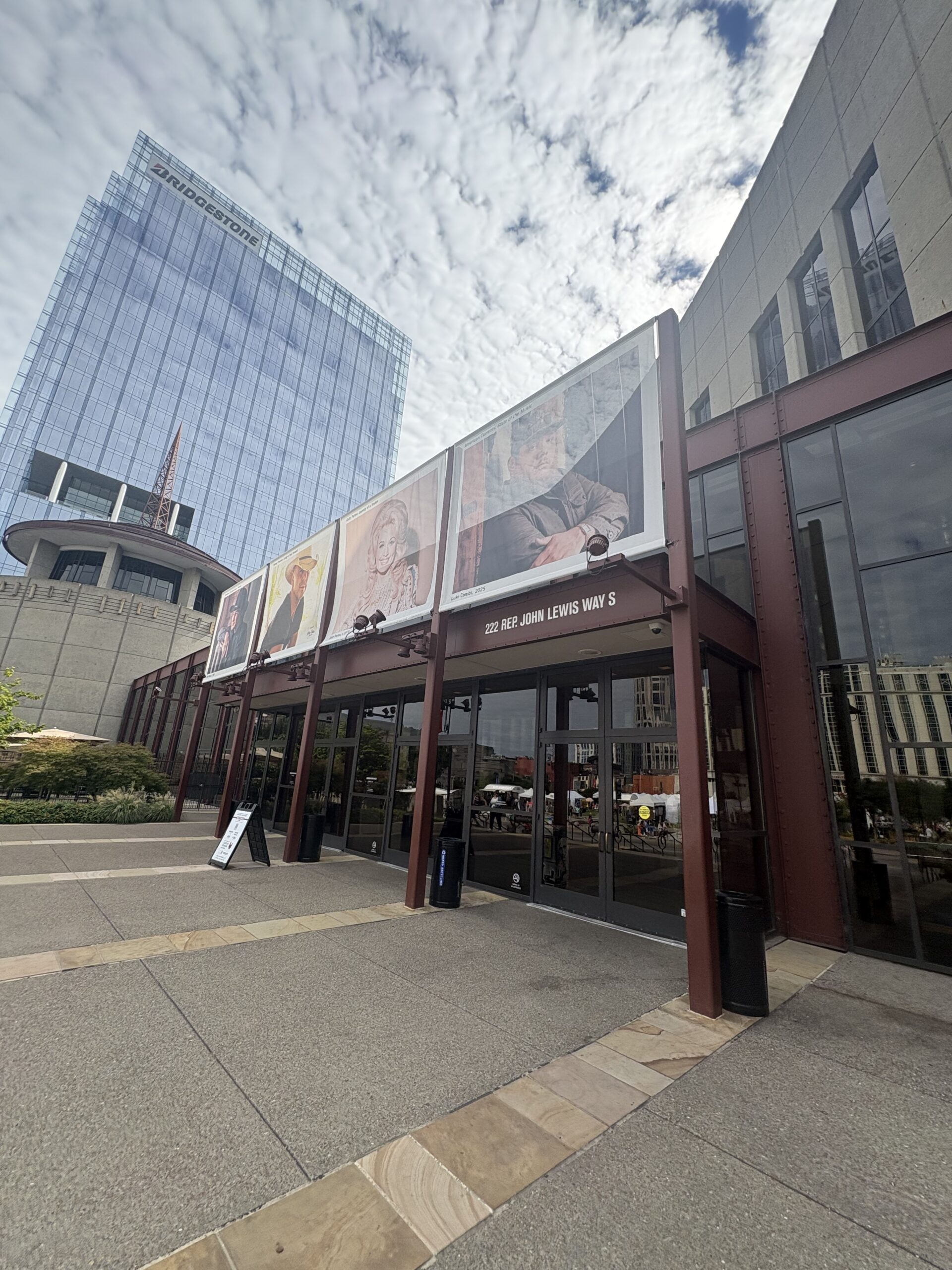
The Quick Answer
Tickets & What to Know
General admission $31.95 adults (13+) · $21.95 youth (6–12) · Free under 5. Plan 2–2.5 hours. Galleries close at 5 p.m. Get your parking ticket validated at the Info Desk — $15 for up to 3 hours.
Buy Tickets on Viator → Museum + Studio B Combo →The Quick Version
Address
222 Rep. John Lewis Way South (formerly Fifth Avenue South), Nashville, TN 37203 — one block from Lower Broadway
General Admission
$31.95 adults (13+) · $21.95 youth ages 6–12 · Free under 5 (museum’s own prices; resellers like Viator price a little differently)
Studio B Combo
From about $50–$55 per adult depending on where you book — adds the guided RCA Studio B tour with bus transportation
Time Needed
2–2.5 hours for the museum; add 1 hour for Studio B
Hours
Opens 9 a.m. daily; galleries close at 5 p.m. Closed Thanksgiving, Christmas Eve and Christmas Day.
Best Time to Go
Early Saturday or Sunday morning — crowds pick up fast after 11 a.m.
Parking
Validated rate at the Walk of Fame Park or SoBro Tower garages: $15 up to 3 hours, $25 up to 6 hours
Nashville Locals
Youth 18 and under from Davidson and bordering counties get in free; adults can borrow a free Community Counts Passport from participating libraries
Getting There and Parking
The museum is right in the heart of downtown, at the corner of Rep. John Lewis Way South (the old Fifth Avenue South) and Demonbreun. That’s close to everything — which also means parking is a real issue, especially on weekends.
The cheapest option most visitors miss: museum validation. Park at the Walk of Fame Park garage (161 4th Ave. S.) or the SoBro Tower garage (210 3rd Ave. S.) and get your ticket validated at the Info Desk inside the Conservatory. The validated rate is a flat $15 for up to 3 hours or $25 for up to 6 hours, between 9 a.m. and 6 p.m. Validation codes are only available until 5 p.m., so grab yours before you leave. Museum members get another $5 off.
The Music City Center garage (6th Avenue South and Demonbreun) is another close option, though it isn’t part of the validation deal.
If you’d rather lock in a spot before you arrive, especially on a busy weekend, SpotHero shows real-time availability and guaranteed rates for garages near the museum — you lock in a price before you arrive instead of circling and paying whatever the lot charges on the spot. See the full Nashville parking guide if you’re still figuring out the area.
First Impressions: The Entrance and the Lyric Wall
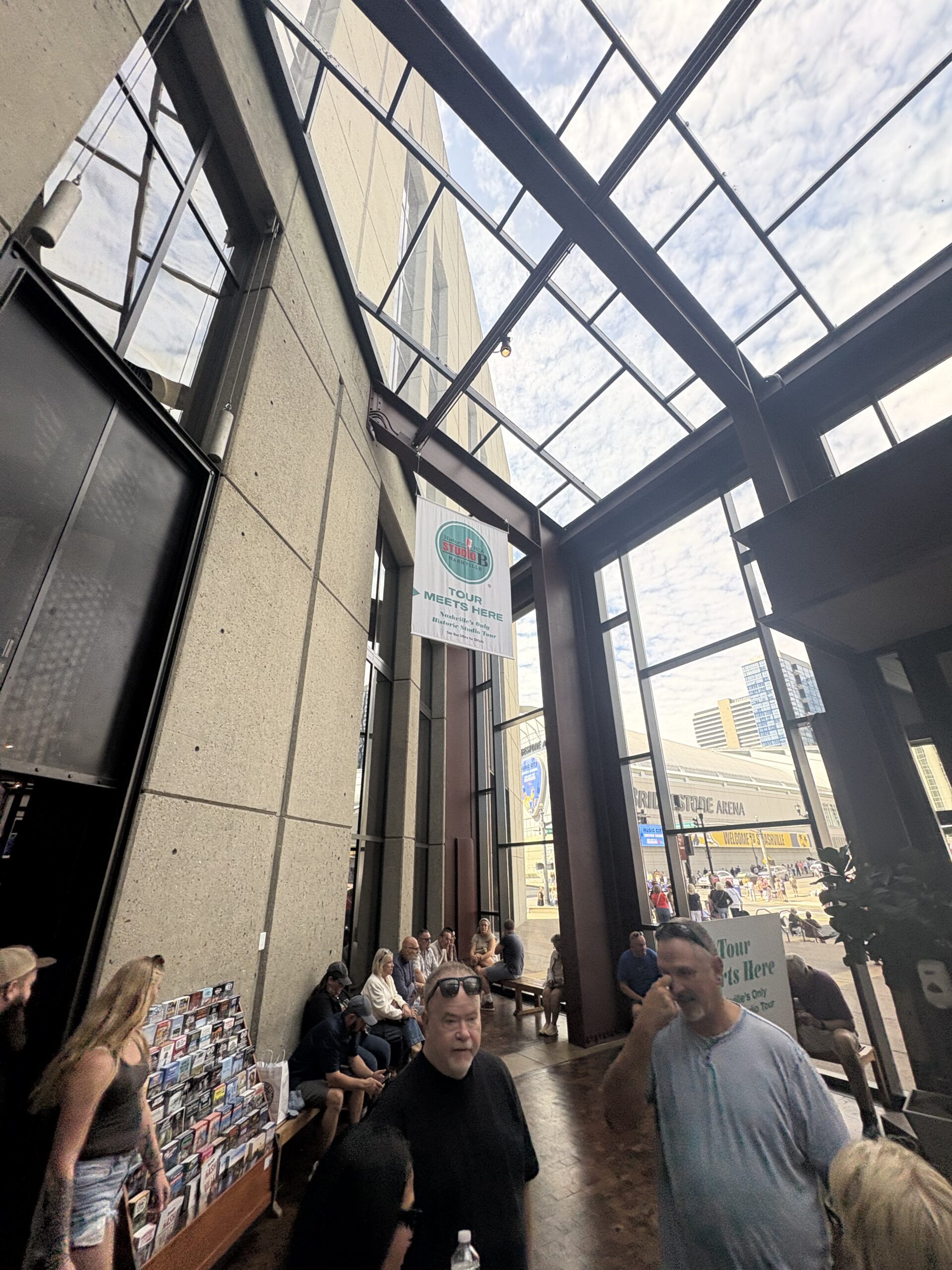
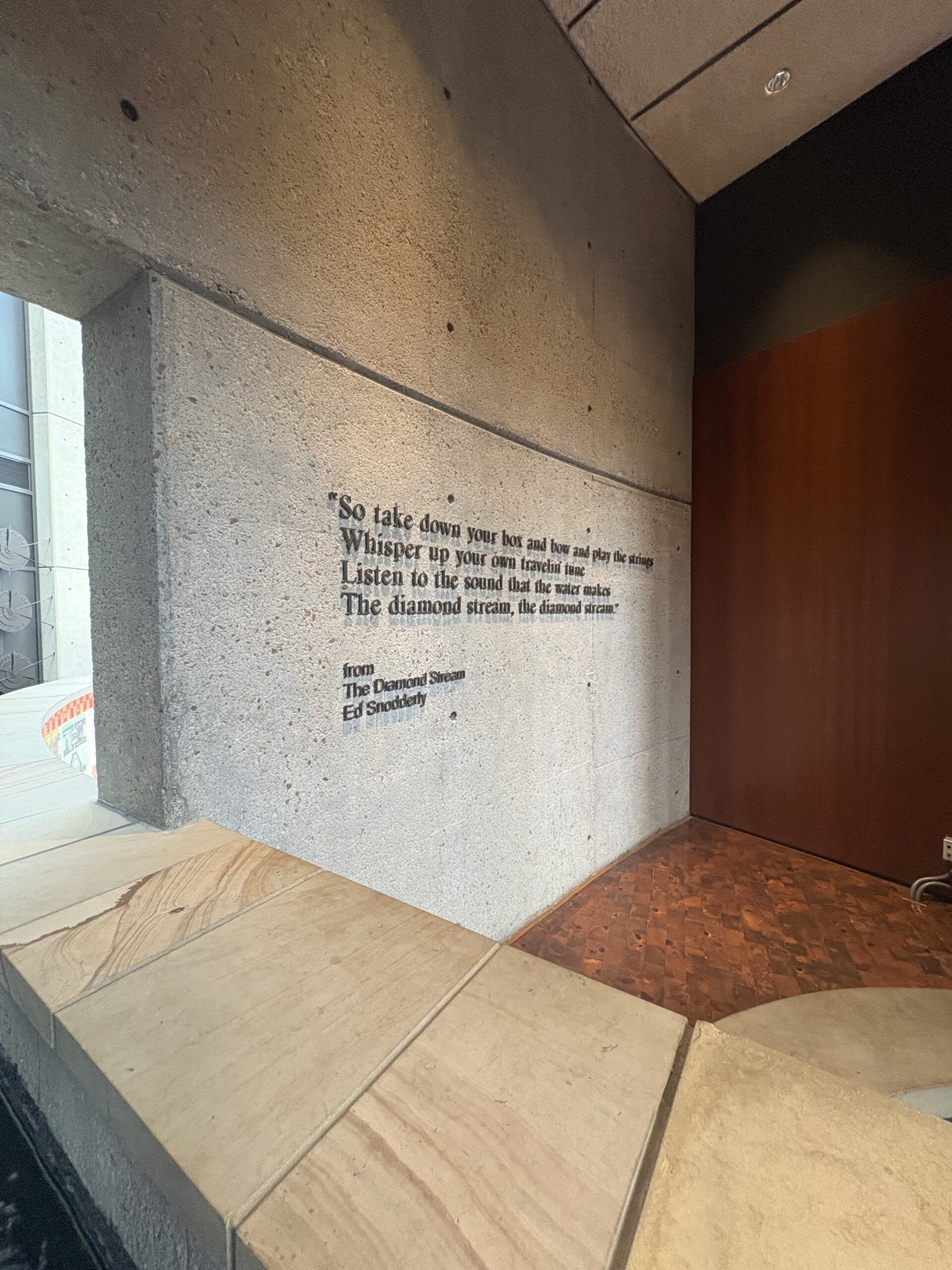
You walk in and the first thing you hit is a lyric carved into the concrete wall — songwriter Ed Snodderly’s “The Diamond Stream”:
“So take down your box and bow and play the strings
Whisper up your own travelin’ tune
Listen to the sound that the water makes
The diamond stream, the diamond stream.”
It sets the tone immediately. This place takes the craft of songwriting seriously. Not just the hits, not just the fame. The actual words.
In the lobby, you’ll also see the banner for the RCA Studio B Tour — “Nashville’s Only Historic Studio Tour, Meets Here.” More on that below.
The Rotunda: “Will the Circle Be Unbroken”
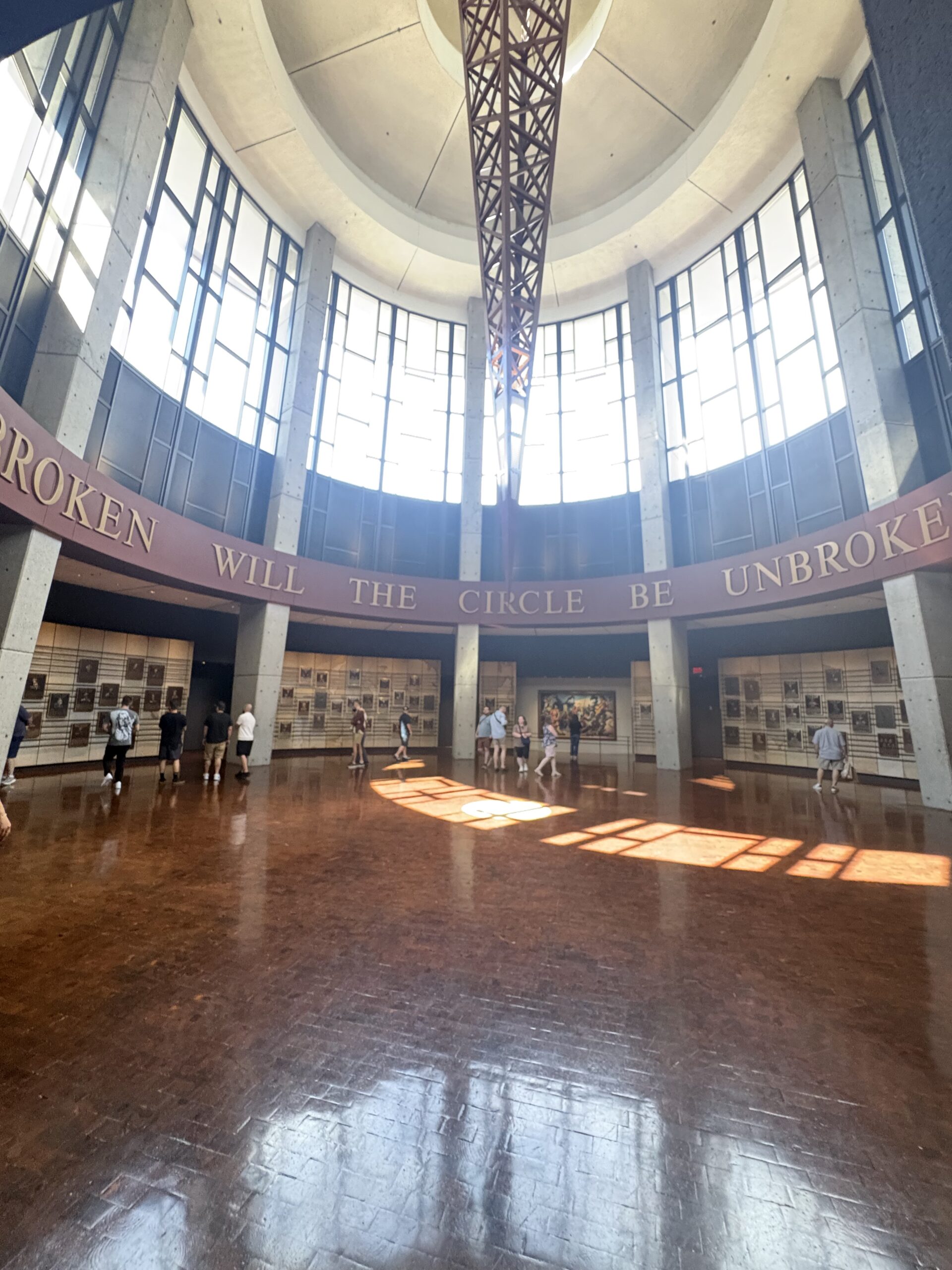
Before you get to the exhibits, you pass through the Rotunda, and it stops you cold. The words to “Will the Circle Be Unbroken” — written by A.P. Carter — ring the entire room in a continuous band of text. The light pours in from above. The scale of it is unexpected.
There’s a small purple plaque mounted inside the Rotunda worth stopping to read. It explains that the stone bars running along the building’s exterior aren’t decorative — they represent the musical notes of the guitar chorus played by Mother Maybelle Carter on the Carter Family’s 1935 recording of “Will the Circle Be Unbroken,” transcribed into the architecture itself.
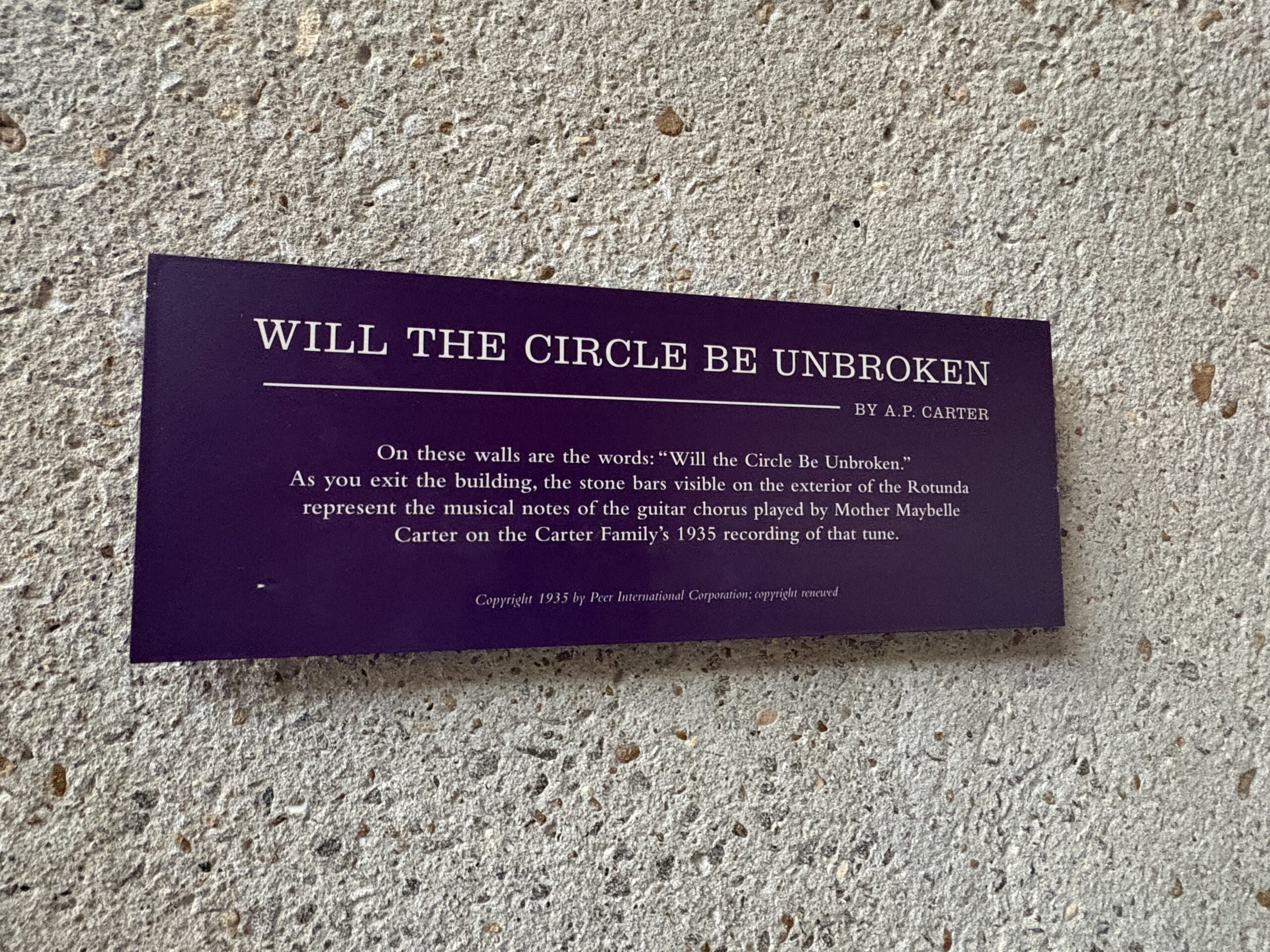
Someone put that level of thought into a parking garage facade. That alone tells you what kind of museum this is.
The Hall of Fame Inductee Plaques
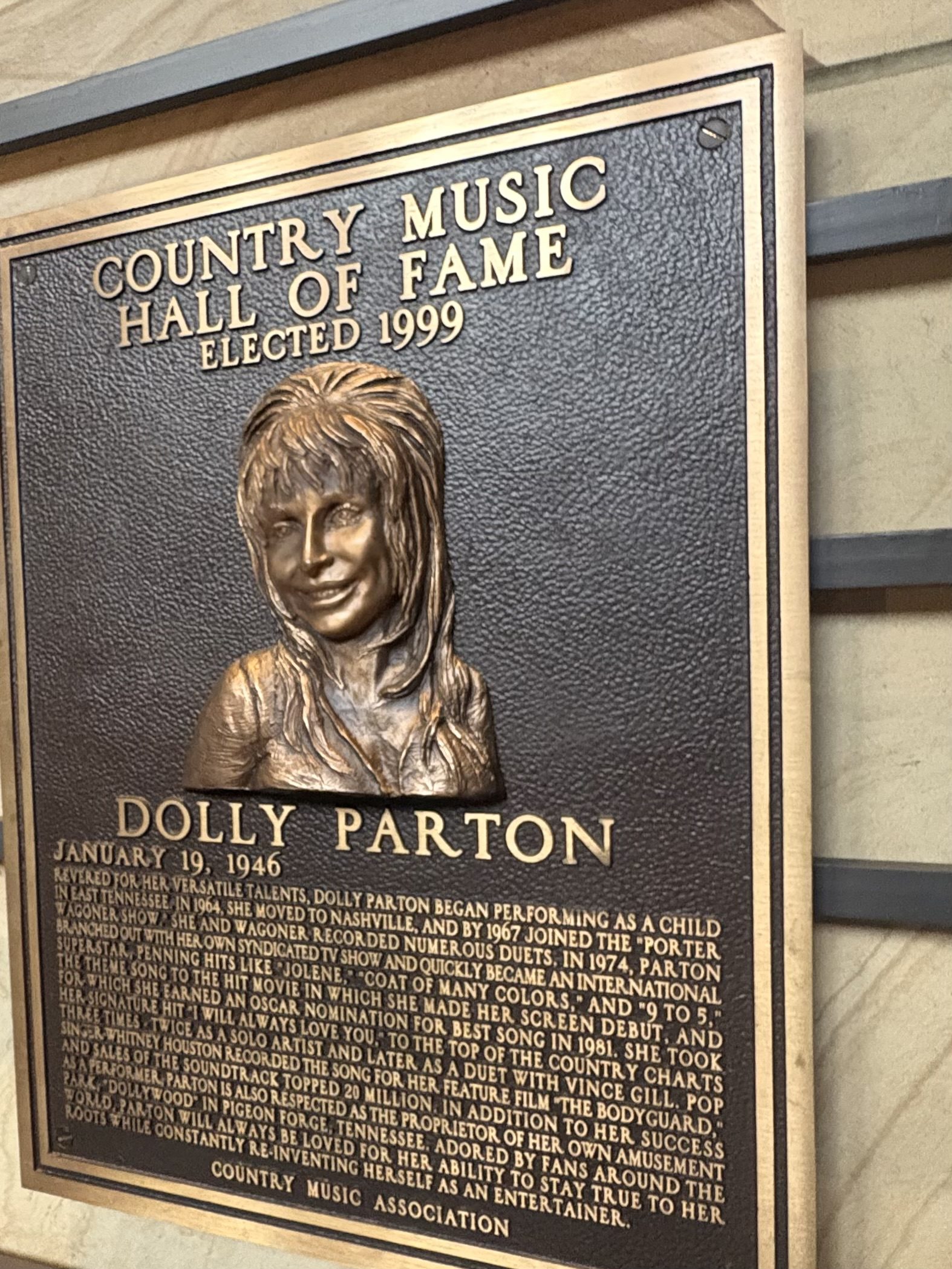
The main Hall of Fame gallery runs along curved walls — hundreds of oval bronze plaques for every inductee, floor to ceiling. Hank Williams. Johnny Cash. Dolly Parton (inducted 1999). Tammy Wynette. George Strait. Garth Brooks. Reba McEntire. Emmylou Harris. The list just keeps going.
What gets you is the depth. These aren’t just names you recognize. Some are names you’ve never heard who shaped everything you have heard. That’s the whole point of a Hall of Fame done right — it teaches you what you didn’t know you didn’t know.
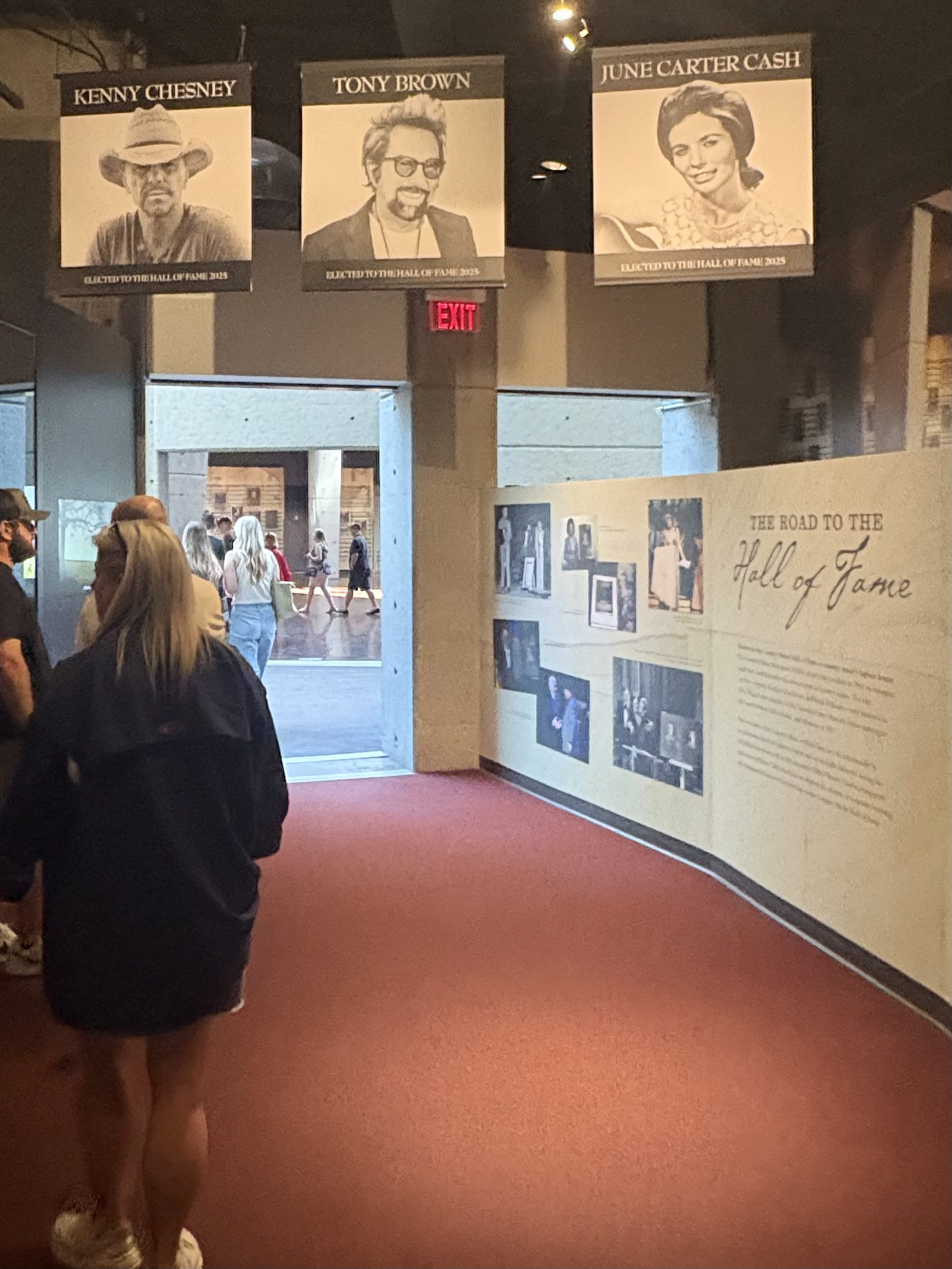
The 2025 inductees are featured in their own section: Kenny Chesney, Tony Brown, and June Carter Cash. June Carter Cash’s induction, separate from her husband Johnny Cash’s, felt right to see acknowledged that way.
The Cars: Elvis’s Cadillac and Webb Pierce’s Silver Dollar Car
This is the section that stopped me completely, and I didn’t expect it.
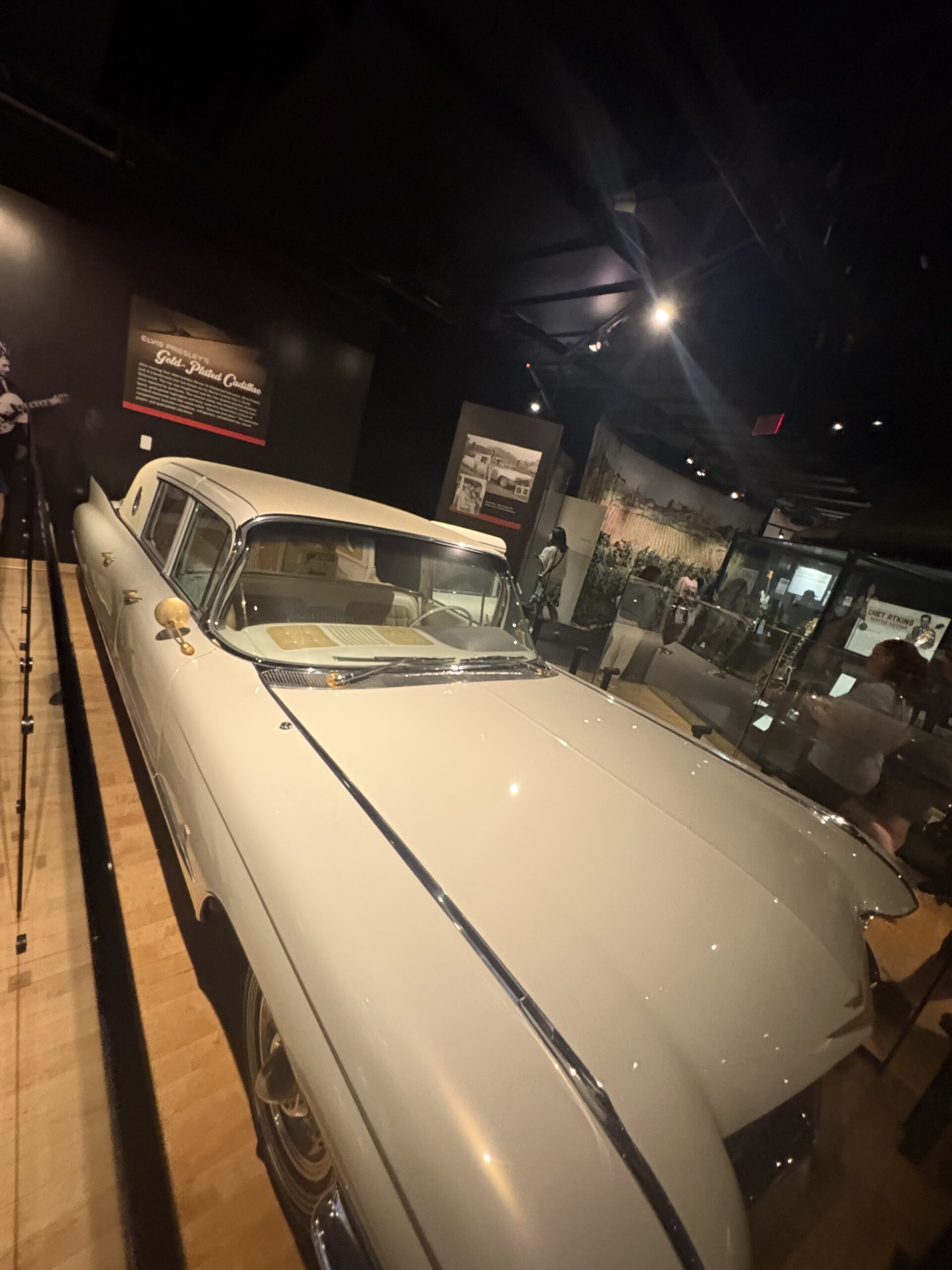
Elvis Presley’s Gold-Plated Cadillac takes up an entire room. The sign explains it: Elvis bought this 1960 Cadillac Series 75 and had it converted by Barris Custom City in North Hollywood — his dream car, he called it. The exterior is painted with 40 coats of a mixture that includes crushed diamonds and fish scales ground into the lacquer. The fender ornaments are gold-plated. Inside: a telephone, a refrigerator, a record player, and a gold-plated television. It was 1960. That car has no business existing.
What made it hit differently: a large mural photo of a young Elvis on the wall behind it, guitar in hand, before any of this existed. The car and the man side by side.
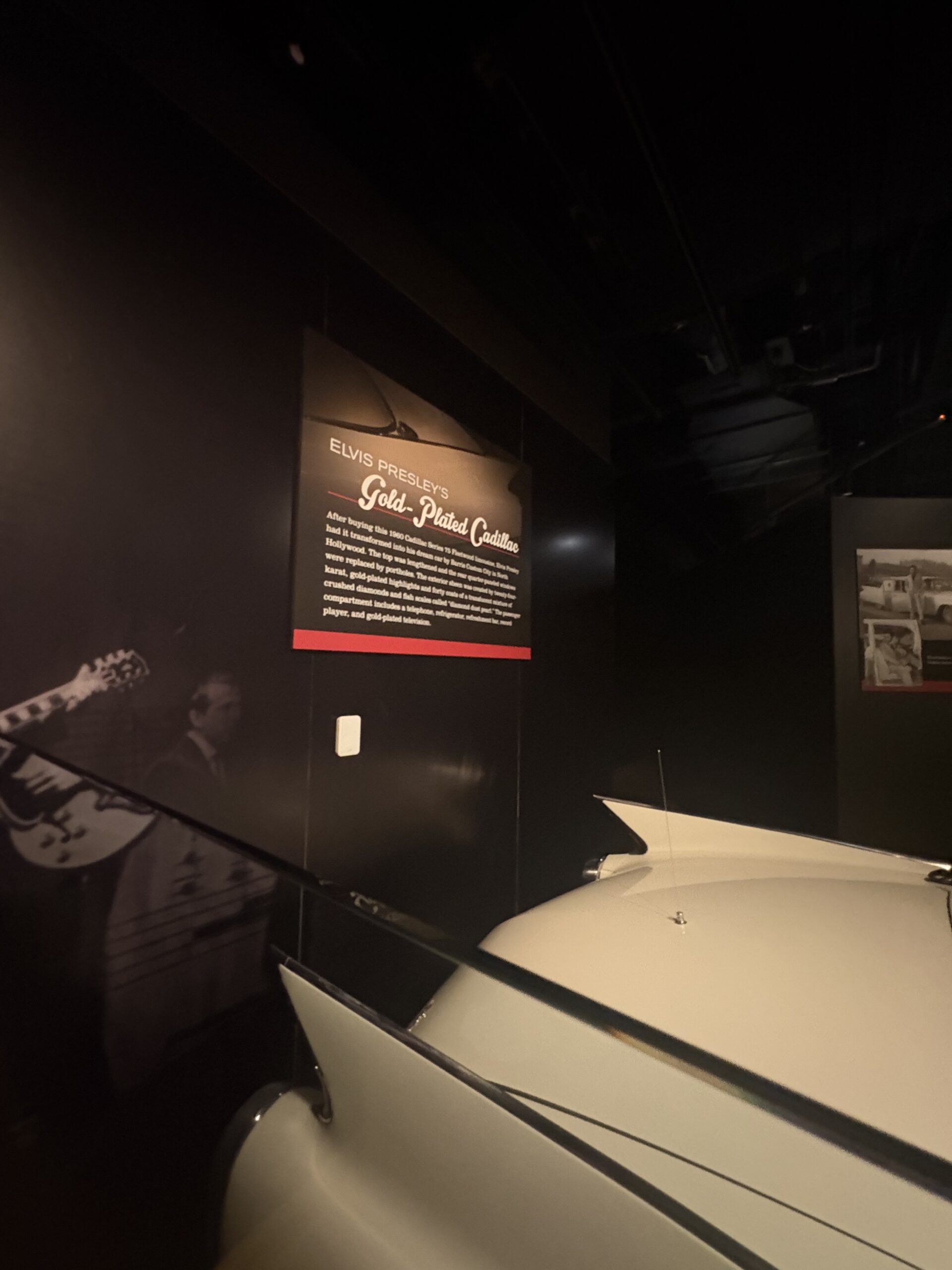
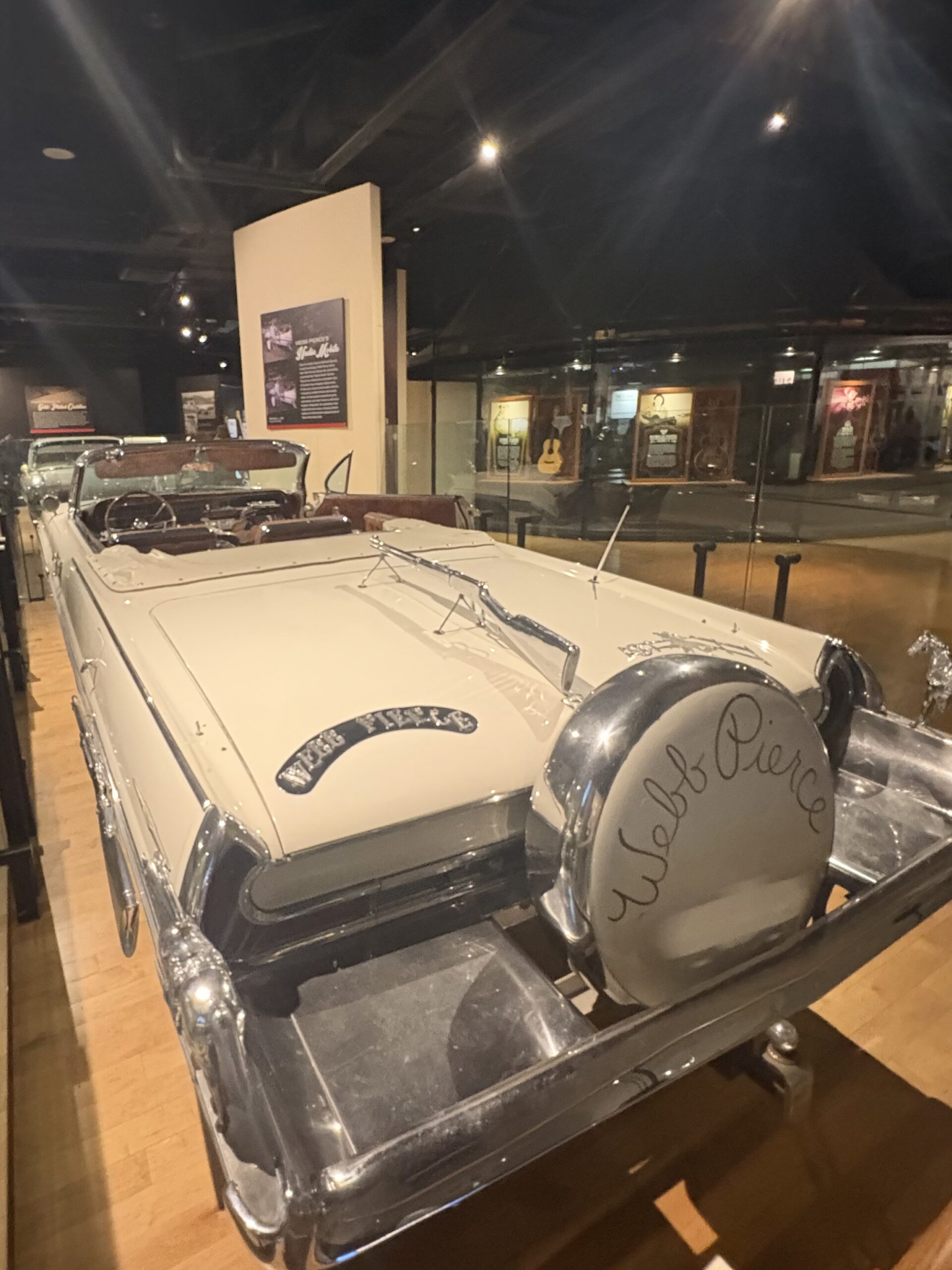
Webb Pierce’s Silver Dollar Car — a chrome-covered convertible studded with silver dollars, with his name in script on the spare tire cover. Webb Pierce was one of the biggest country stars of the 1950s, and this car was his brand: excessive, impossible to miss, completely on purpose. At one point it was parked outside his house in Nashville as a tourist attraction. People lined up to see it.
Two cars. Two completely different ideas of stardom. Both unforgettable.
The Artifact Cases: Stage Wear, Instruments, and Costumes
The museum’s real strength is what’s behind the glass. You move through case after case of stage wear and instruments, each one with the story attached:
- Loretta Lynn’s stage gown — the construction alone is worth stopping for
- Dolly Parton’s guitar and costumes — alongside Porter Wagoner’s orange rhinestone suit in the “You’re Lookin’ at Country” case
- Porter Wagoner’s rhinestone suit — burnt orange, embroidered — the Nudie suit tradition in full effect
- Jeannie Seely’s green performance dress and Grammy trophies — alongside Roger Miller’s guitar. Roger Miller wrote “King of the Road.” His guitar is right there.
- Bob Dylan’s possessions — including a hat he wore filming Pat Garrett & Billy the Kid (1973) and a U.S. Army jacket belonging to Kris Kristofferson. Nashville’s reach is longer than most people realize.
- Merle Haggard and Faron Young stage wear — with Faron Young’s gold lamé suit next to Haggard’s embroidered performance jacket
- Miranda Lambert, Florida Georgia Line, Luke Bryan, Darius Rucker — the modern era represented in their own cases
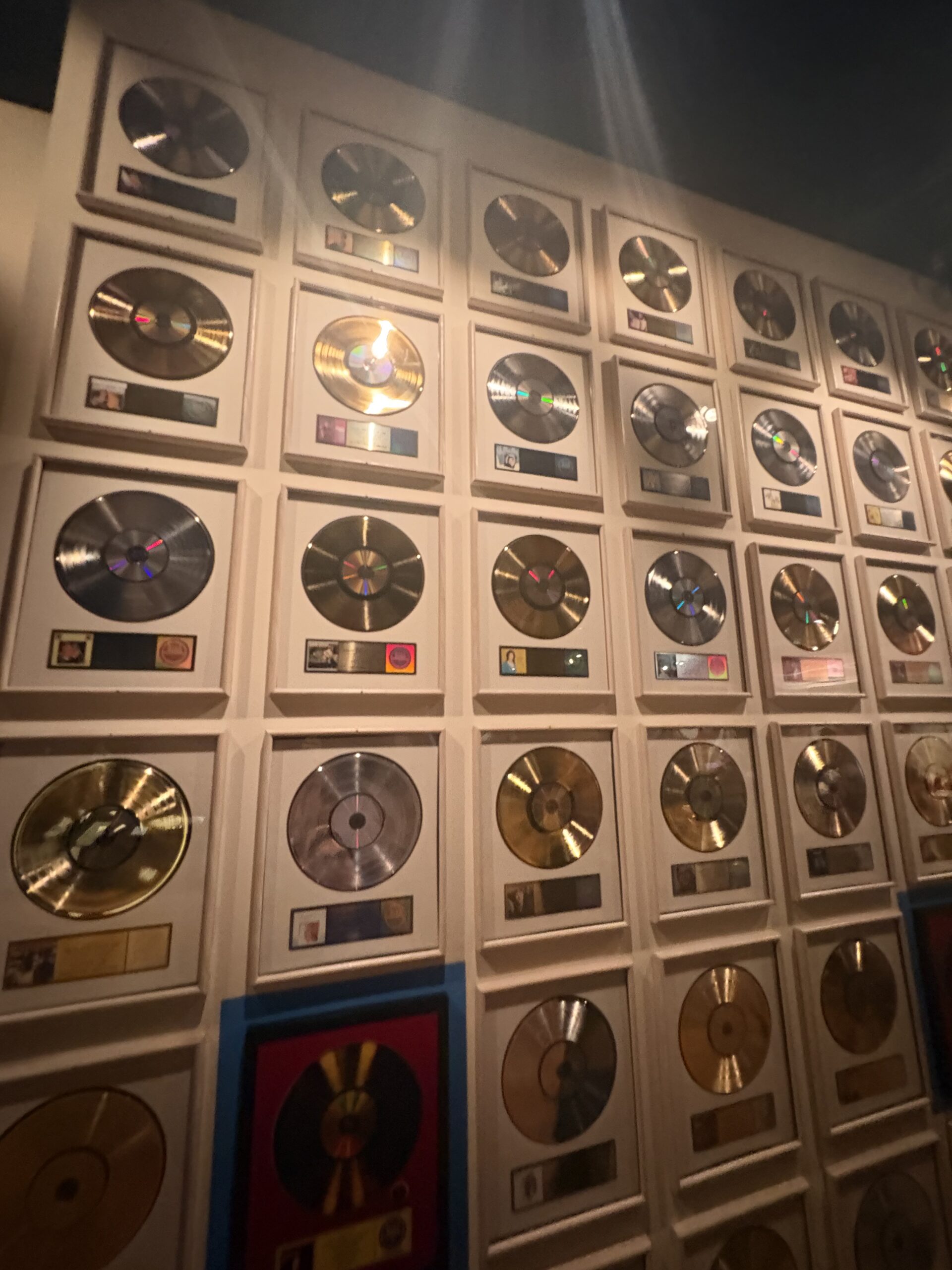
There’s also a wall of gold and platinum records — just an entire floor-to-ceiling grid of them. The scale of what Nashville produced, in certified sales, in one frame.
The Hatch Show Print Concert Poster Wall
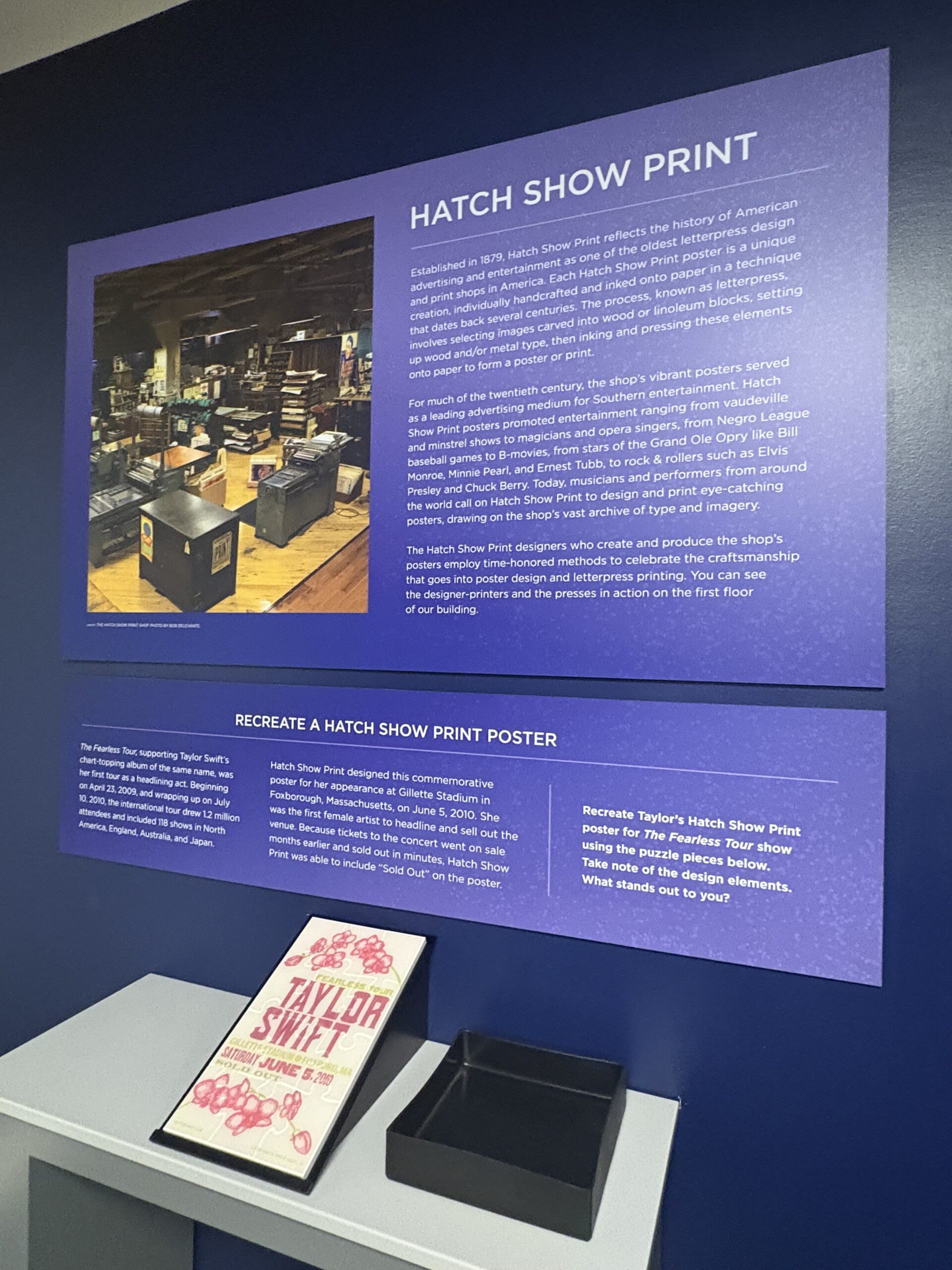
An entire wall covered in original concert posters — letterpress printed by Hatch Show Print, Nashville’s legendary print shop that’s been making show posters since 1879. Elvis Presley. Bill Monroe. Sons of the Pioneers. WSM Grand Ole Opry. Charley Pride. Merle Haggard. Webb Pierce. These aren’t reproductions. They’re the actual posters that went up on telephone poles and storefront windows.
At the base of the wall: a vintage jukebox. The whole tableau feels like a corner of the 1950s preserved intact.
The Journey Continues: 1960s to Present
The museum walks you through country music’s evolution decade by decade. The Staple Singers and Muscle Shoals exhibit — “I’ll Take You There” — is one of the richest sections. It tells the story of how Muscle Shoals, Alabama became the “Hit Recording Capital of the World,” how Aretha Franklin’s recording session there sparked a sound that pulled musicians from across the country, and how the Staple Singers found their audience through FAME Studios at 3614 Jackson Highway. This is where the museum makes its “all American music” argument most clearly.
All of this is part of the museum’s core permanent exhibition, Sing Me Back Home, which runs from country music’s 19th-century roots to today. Look for American Currents: State of the Music too — an annual exhibit on the past year in country music.
The Kenny Chesney “Living in Fast Forward” featured artist exhibit takes up its own full section — large concert banners, guitars, stage costumes, tour memorabilia. If you’re a Chesney fan you will not be disappointed.
Clint Black: “The Hard Way on Purpose”
“I learned early on not to strive for perfection. Perfection is an accident. Excellence is attainable. If you’re striving for excellence, every now and then you can get perfection.” — Clint Black. That’s a good line regardless of whether you know who Clint Black is.
The Dolly Parton Exhibit: Gone Now, But Worth Knowing About
When we visited, there was a special Dolly Parton exhibit running that drew its own separate line. We waited an hour to get in — we went the day before it closed. It was completely worth it.
I’m including this even though the exhibit is over because the museum rotates special exhibits like this regularly. If there’s ever another Dolly exhibit, go. Don’t overthink it. Wait the hour. The permanent Dolly presence in the museum is excellent — her plaque on the Hall of Fame wall (elected 1999), her guitar and costumes in the main collection. But a dedicated exhibit is a different level of access to the story.
The RCA Studio B Tour: Is It Worth Adding?
RCA Studio B is a recording studio a few blocks away on Music Row where Elvis Presley recorded over 200 songs, and where Dolly Parton, Willie Nelson, Chet Atkins, Roy Orbison, and countless others laid down tracks that defined American music. The tour is sold as a combo with museum admission: roughly $50–$55 per adult depending on where you book (versus $31.95 for the museum alone). Tours leave from the museum and include the bus ride to Music Row and back.
We did general admission only — we had two to three hours and that was exactly the right call. The museum alone fills that time completely. If you have a full day in Nashville and the Elvis recording history means something to you, the combo is worth it. Tours have set departure times, so if you want the combo, book it in advance rather than trying to add it at the door.
Book Tickets
General Admission or Studio B Combo
Book ahead on Viator to skip the ticket line — especially on weekends when the museum fills up fast after 11 a.m.
General Admission → Museum + Studio B Combo →If you’re making a full day of downtown Nashville, a Nashville trolley tour pairs well — you’re already in the heart of the city. Nashville food tours are another great add-on if you’re hungry after two-plus hours of walking the exhibits.
Discounts and Free Admission for Locals
If you live in Nashville-Davidson County or a bordering county (Cheatham, Robertson, Rutherford, Sumner, Williamson or Wilson), the museum’s Community Counts program is worth knowing about:
- Kids get in free. Local youth 18 and under always get free admission, and up to two adults with them get 25% off. Bring proof of residency.
- Free library passport. Check out a Community Counts Passport at participating public libraries for free admission for up to two adults.
- Everyone else: the museum offers discounted adult tickets for students, seniors (60+), and military and veterans with valid ID.
New to town? Our Moving to Nashville guide covers everything else on the to-do list.
Practical Tips
- Arrive early. Solid 30-minute wait by mid-morning on Saturdays. Get there at or just after opening.
- Plan 2 hours minimum. The museum is three floors. You will find things to slow down for.
- Photography is allowed. No flash on certain exhibits, but you can photograph almost everything — including the cars.
- The gift shop is at the end. Budget time and willpower accordingly.
- Validate your parking before 5 p.m. The $15 museum rate needs a code from the Info Desk. Or book ahead on SpotHero.
- Watch the clock. Galleries close promptly at 5 p.m., and staff start announcing it 15 minutes before.
What’s Nearby
- Lower Broadway honky tonks guide — the bars, the cover charges, what to expect — 5-minute walk from the museum
- Bridgestone Arena parking — if you’re combining with a show
- Downtown Nashville parking guide — full breakdown of garages, rates, and what to avoid
- Things to Do in Nashville — the full city guide
- Grand Ole Opry — tickets, tips and what to expect
- Dolly Parton Nashville — her legacy across Music City
- Dolly’s Life of Many Colors Museum — a five-minute walk away
- Nashville Bachelorette Party Guide — the Hall of Fame makes a great Saturday-morning stop
Staying Downtown?
Book Your Nashville Hotel or VRBO
The Country Music Hall of Fame is walking distance from Broadway and most downtown hotels. Stay downtown and walk to everything.
Browse Nashville Hotels → Browse Nashville VRBOs →Frequently Asked Questions
How much does the Country Music Hall of Fame cost in 2026?
The museum’s own price is $31.95 for adults (13+) and $21.95 for youth ages 6–12. Children under 5 are free. Combo tickets adding the RCA Studio B Tour run about $50–$55 per adult depending on where you book. Resellers like Viator price slightly differently. Book on Viator or direct at countrymusichalloffame.org.
How long does the Country Music Hall of Fame take to visit?
Plan on 2 to 2.5 hours for the museum itself. If you add the RCA Studio B Tour, budget another 45–60 minutes. The Studio B tour has set departure times, so book the combo in advance.
Is the Country Music Hall of Fame worth it if you’re not a country music fan?
Yes. The museum tells the story of American music, not just country. Elvis Presley’s Gold-Plated Cadillac is here. So is Bob Dylan’s connection to Nashville. The Staple Singers. The story of Muscle Shoals. I arrived skeptical and spent two hours without feeling the time pass.
What is the RCA Studio B Tour?
A guided tour of Nashville’s most historic recording studio, where Elvis Presley recorded over 200 songs and Dolly Parton, Willie Nelson, and Chet Atkins recorded as well. Sold as an add-on to general admission. Nashville’s only historic recording studio open to the public.
Where do you park for the Country Music Hall of Fame?
Park at the Walk of Fame Park garage (161 4th Ave. S.) or the SoBro Tower garage (210 3rd Ave. S.) and validate at the museum’s Info Desk for a flat $15 (up to 3 hours) or $25 (up to 6 hours). Validation codes are available until 5 p.m. You can also book a spot ahead on SpotHero.
What are the must-see exhibits at the Country Music Hall of Fame?
The Rotunda (Will the Circle Be Unbroken), Elvis Presley’s Gold-Plated Cadillac, Webb Pierce’s Silver Dollar Car, the Hall of Fame inductee plaques, the Hatch Show Print concert poster wall, the Kenny Chesney featured exhibit, and the Clint Black exhibit. The Ray Price “Crazy Arms” display is a small case that earns more time than it asks for.
What are the Country Music Hall of Fame hours?
The museum opens at 9 a.m. daily and the galleries close promptly at 5 p.m. It’s closed Thanksgiving, Christmas Eve and Christmas Day. Hours can change for special events, so check countrymusichalloffame.org before you go.
Is the Country Music Hall of Fame free for Nashville residents?
Local youth 18 and under from Davidson and bordering counties get in free, and up to two adults with them get 25% off. Adults can also borrow a free Community Counts Passport from participating public libraries.
NashvilleUnscripted.com covers Nashville from a firsthand perspective — no press passes, no comp tickets. Prices, hours and parking rates were checked in November 2026 and can change; verify at countrymusichalloffame.org before your visit. This post contains affiliate links.